How to Memorize Vocabulary Effectively

Ready to boost your vocabulary?
Start LearningWhy Rote Memorization Fails You
You've been there. You sit down, open a vocabulary list, and start drilling: anachronism... anachronism... anachronism. You cover the meaning, test yourself, uncover it. You go through 30 words. The next morning — blank. It's as if the words were never there.
Your brain is not a hard drive. It doesn't store facts by repetition. It stores information through association — by connecting new things to things it already knows. When you rote memorize, you're giving your brain nothing to hook onto. The word floats in isolation with no context, no image, no story. And isolated facts fade fast.
The result? You forget most words within 24 hours. And when review time comes, you already know you've forgotten them, which makes the process feel like a punishment rather than progress. You're reviewing the same words again and again, never quite confident they'll stick.
There's a better way — one that works with your brain's natural strengths rather than against them.
The Method That Actually Works
The approach used at VocabularyFast is built on two steps: a keyword and a memory link. Together, they transform vocabulary learning from a grinding chore into a surprisingly enjoyable exercise.
Step 1: Find the Keyword
The keyword is a word or short phrase that your target word looks like or sounds like. It's your first bridge — a familiar foothold derived directly from the spelling or pronunciation of the new word.
The critical thing about the keyword: because it comes from the word itself — from how it looks or sounds — you can always get back to it. The moment you see the vocabulary word again, the keyword naturally surfaces. You don't need to memorize the keyword separately. It's already built into the word.
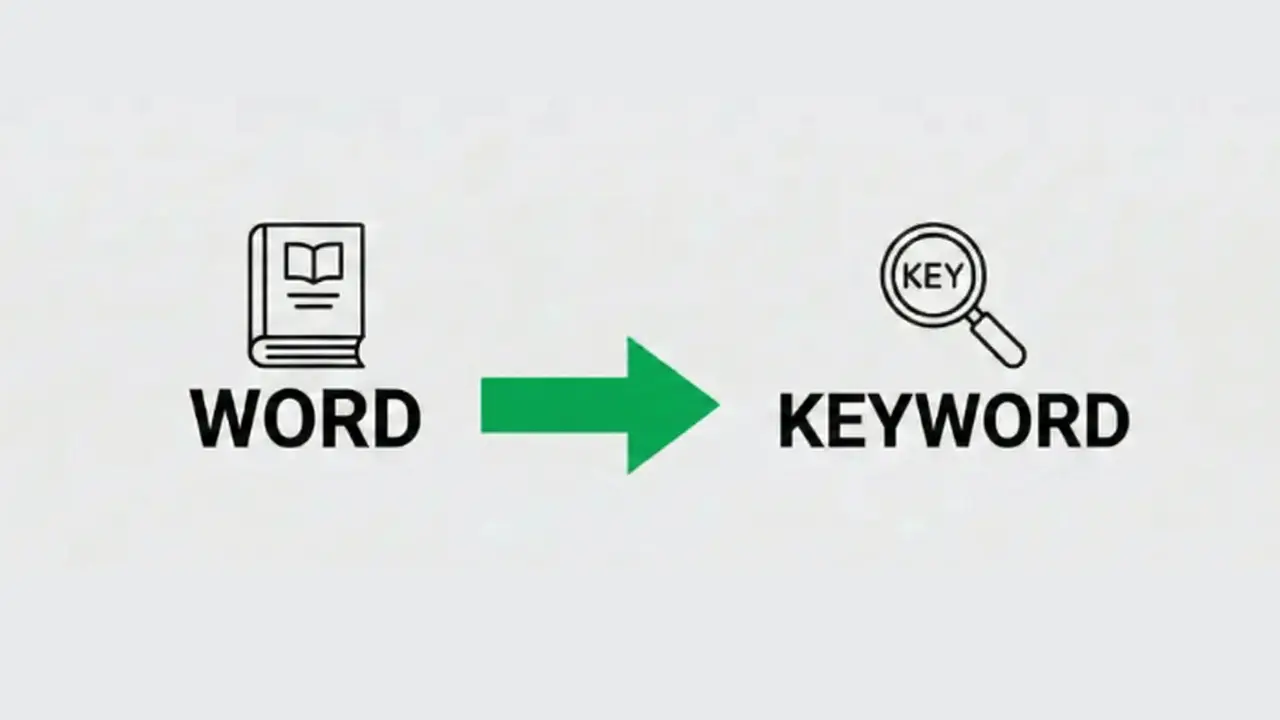
For example: the word ANACHRONISM. Say it out loud. You hear ANA and CROW. So your keyword is "Ana crow." That's it. Simple, and entirely derived from the word itself.
Step 2: Build the Memory Link
This is where the real magic happens. Now you take your keyword and connect it to the meaning through a vivid, memorable image or story.
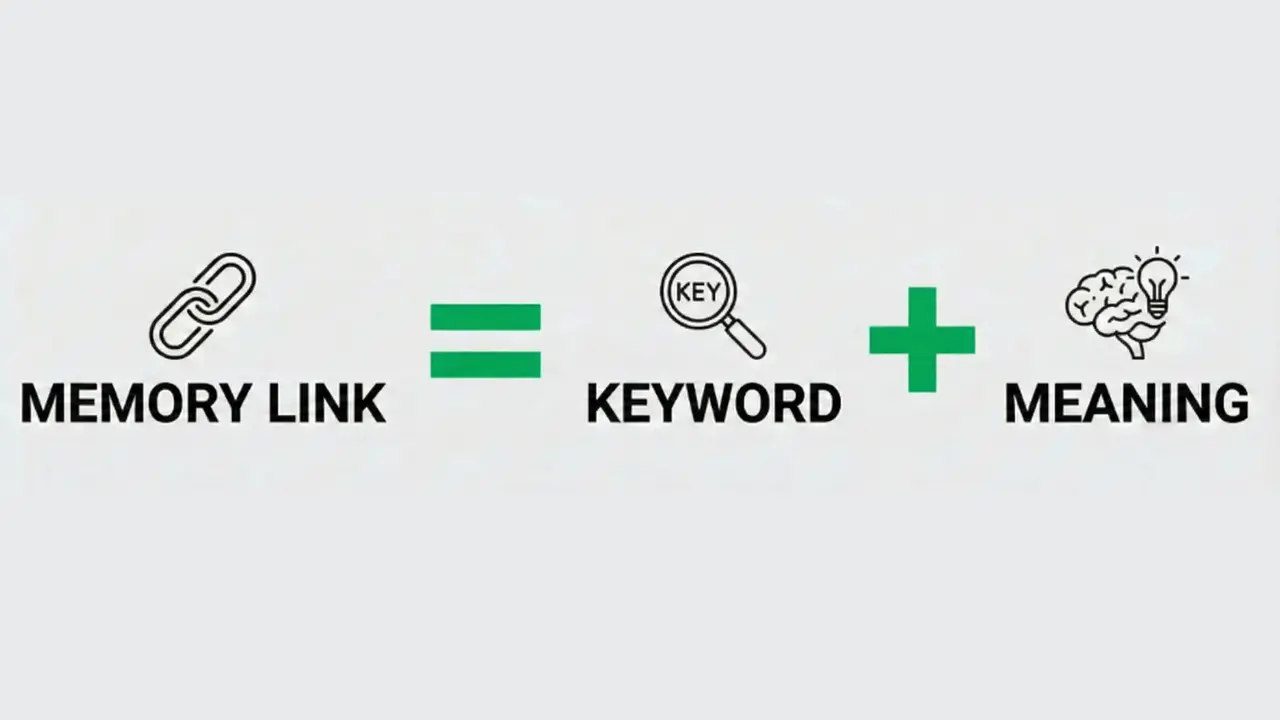
The more specific, absurd, or emotionally striking the image, the better. Your brain is wired to remember things that stand out. A generic image fades. A specific, weird, funny, or dramatic scene sticks.
ANACHRONISM means: something that belongs to a different time period — out of place in time.

Ana spotted an ancient, weathered crow perched among a group of sleek young modern crows — all tapping at tiny smartphones. This old crow wore a powdered wig and carried a quill pen. Everyone stared. He clearly belonged to a completely different era. Ana whispered: "That crow is an anachronism."
Now close your eyes for a moment and actually see that scene. Ana, standing wide-eyed. The ancient crow in his wig, utterly out of place. The young crows ignoring him to scroll through their feeds.
You've just done something your brain loves: created a story with a clear visual, characters, and an emotion. That's the kind of thing that sticks.
The Full Process, Step by Step
- See the vocabulary word — e.g., ANACHRONISM
- Extract a keyword from how it looks or sounds: Ana crow
- Build a vivid memory link connecting the keyword to the meaning: Ana sees an old crow among young modern crows — a creature out of time
- Visualise it in detail — see it, feel it, make it real in your mind
When this word appears again — in a review session, a reading passage, or a real conversation — here's what happens automatically:
ANACHRONISM → Ana crow → Old crow among young modern crows → something belonging to another time
The word unlocks the keyword. The keyword unlocks the image. The image contains the meaning. You didn't force yourself to remember a definition. You recalled a story.
Why Review Becomes Fun
Here's what changes when you learn this way: review becomes a game you already know how to win.
With rote memorization, you go into review sessions knowing most words have slipped. Every card feels like a potential failure. The experience is discouraging by design.
With the keyword and memory link method, review is different. You see the word. The keyword pops up from the word itself. The image plays in your mind. And there's the meaning — right there, waiting for you.
That moment of recall is genuinely satisfying. Not because you're being graded on it, but because winning feels good. Every word you get right is a small victory, and those stack up fast.
After a few successful review sessions, something even better happens: you stop needing the keyword and image at all. The meaning becomes direct. The word and its definition are fused together, naturally, without forcing it.
The Role of Spaced Repetition
Even with the best learning method, timing matters. Reviewing a word 10 times in one day gives you far less retention than reviewing it once today, once in 3 days, once in a week, once in a month.
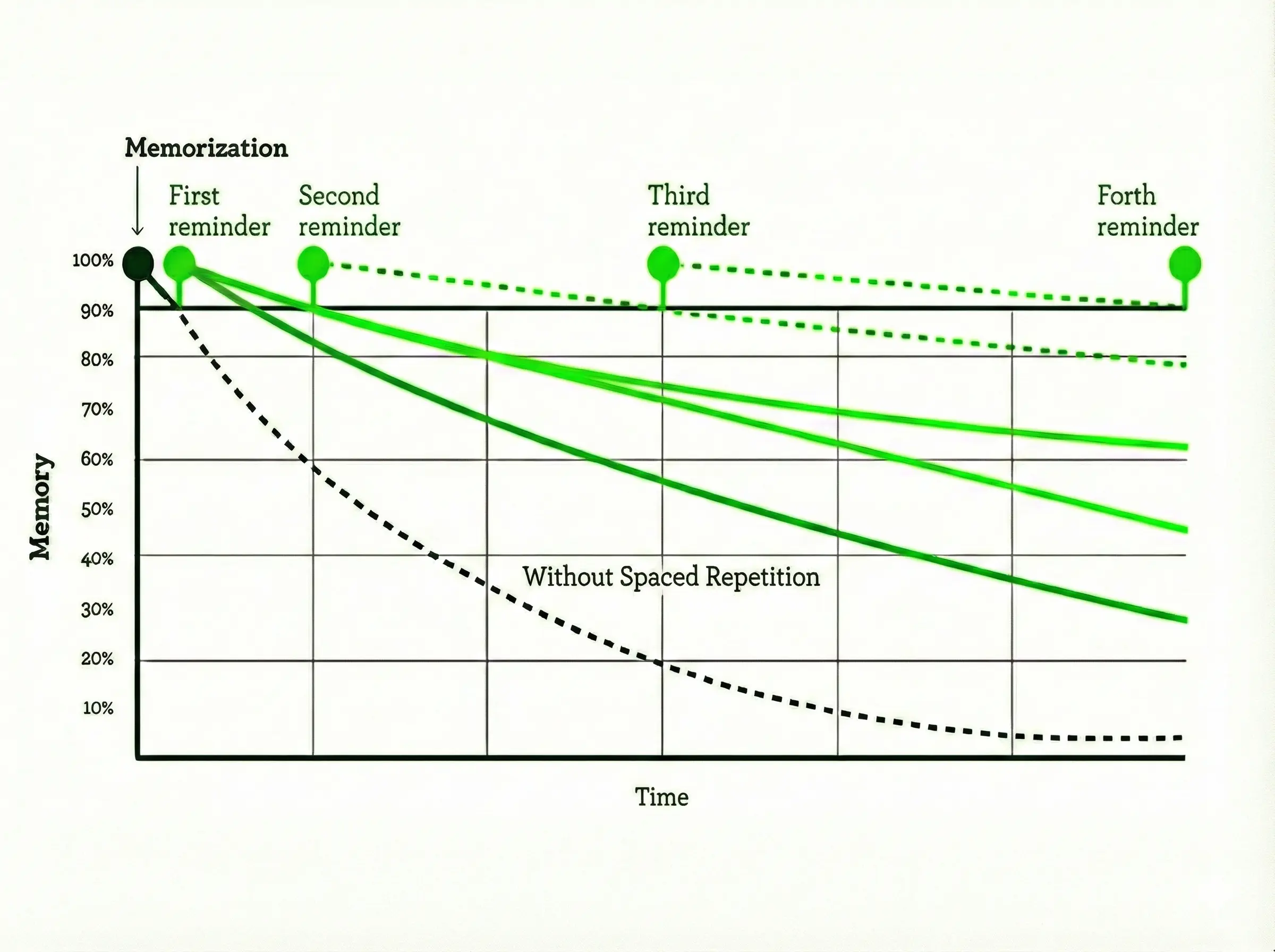
This is spaced repetition — and it's the most evidence-backed approach to long-term memory that exists.
The idea is simple: you review a word right before you're about to forget it. That moment of slight effort — searching your memory, finding the keyword and image — actually strengthens the memory trace more than easy review does. The algorithm handles the scheduling for you. You just show up and review the words it puts in front of you.
What makes spaced repetition especially powerful when combined with mnemonics is this: you're not guessing when you review. You almost always remember — because the keyword and image are there to help you. Reviews stay positive. You stay motivated. Words get locked in for the long term.
The Bottom Line
Vocabulary learning doesn't have to be a grind. The method that most people use — repeating words until they temporarily stick — is fighting against how the brain works.
The keyword-and-memory-link method works with the brain. It creates associations. It builds images. It gives your memory something to grab onto. And when you combine it with spaced repetition, you get a system that not only builds vocabulary fast — it keeps it for life.
The result isn't just more words. It's a fundamentally different experience of learning — one where review sessions feel like wins, words actually stay, and your vocabulary grows in ways that are visible, measurable, and genuinely satisfying.


